



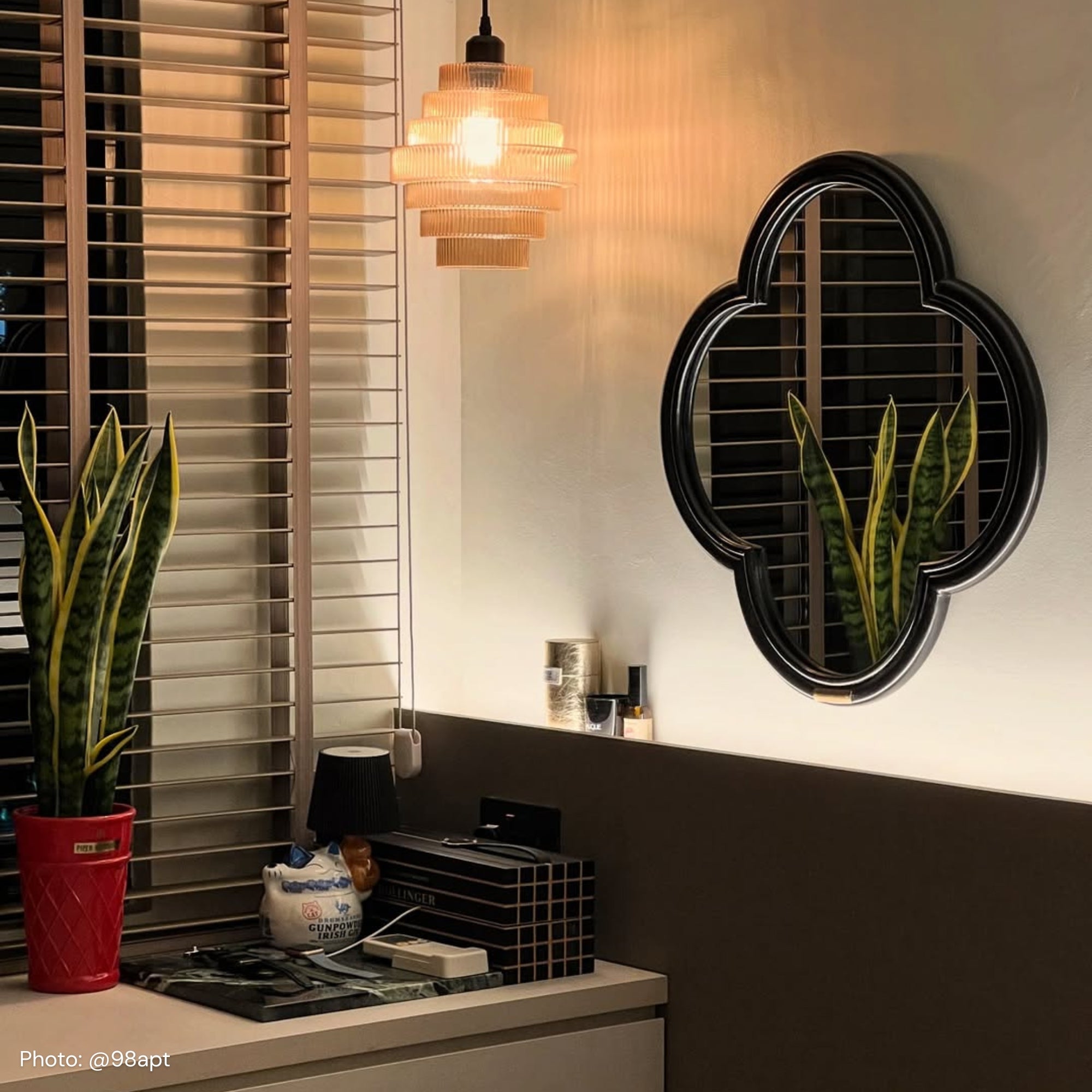
BLOOM Wall Mirror in Black, styled in @98apt's cosy apartment.
A mirror is never just a mirror. It catches you on your way out the door, makes a narrow hallway feel more spacious, or pulls the last bit of afternoon light into a room that needs it.
But where you place a mirror matters almost as much as the mirror you choose. From the entryway to the living room and bedroom, thoughtful mirror placement can help bring more light into your home, create a greater sense of space and make everyday routines a little easier.
Here's our room-by-room guide to where to place mirrors in your home, including how high to hang them and how to choose between a wall mirror and floor mirror.
Where to Place a Mirror in the Entryway
In the entryway, it's less about drama and more about ease — a mirror positioned for a quick, well-lit check on your way out.
The entryway is one of the most practical places for a mirror, while also helping a narrow entrance feel lighter and more open. Eye level is the safest bet for hanging height in any room (see our FAQ below for exact measurements) — so focus here on giving it room to breathe rather than crowding it between coat hooks, shelves or other wall decor.
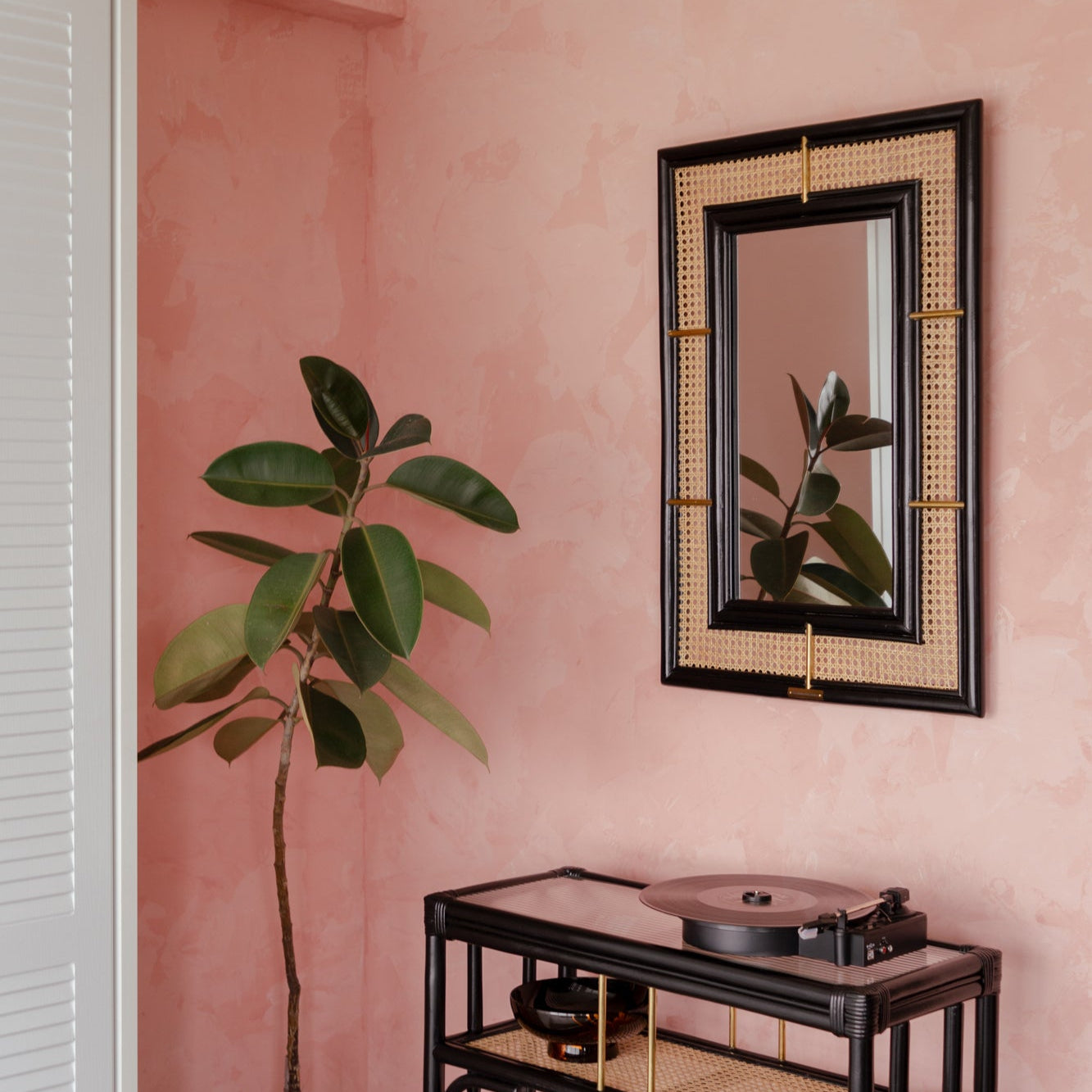
BROOK Wall Mirror, styled with matching BROOK Console Table — a natural spot to drop your keys and take one last look before heading out.
BROOK Wall Mirror brings another layer of texture to the room, with natural wicker and brass details that add warmth and subtle contrast to a plain wall. Position it above a console or as a feature on its own.

A welcoming entryway featuring ALWI Window Wall Mirror, ANVI Bench, HALLIE Clothes Rack and MYRA Sisal Carpet.
A window-style wall mirror like our ALWI Window Wall Mirror works especially well in an entryway. Its paned silhouette adds an architectural element even when the wall itself is plain.
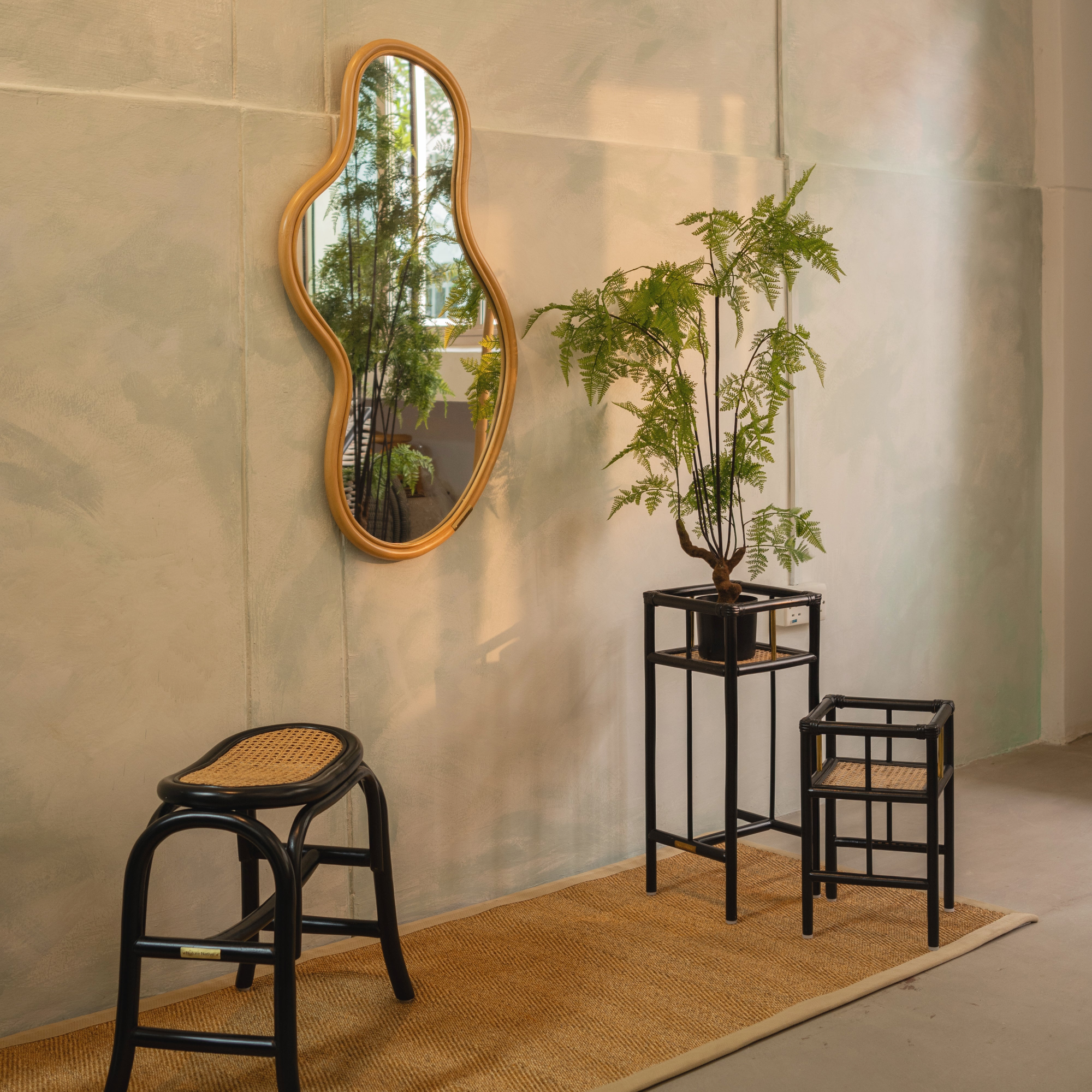
PUDDLE Wall Mirror, styled with BROOK Planters and LINN Stool — a handy spot to sit and put on your shoes by the entryway.
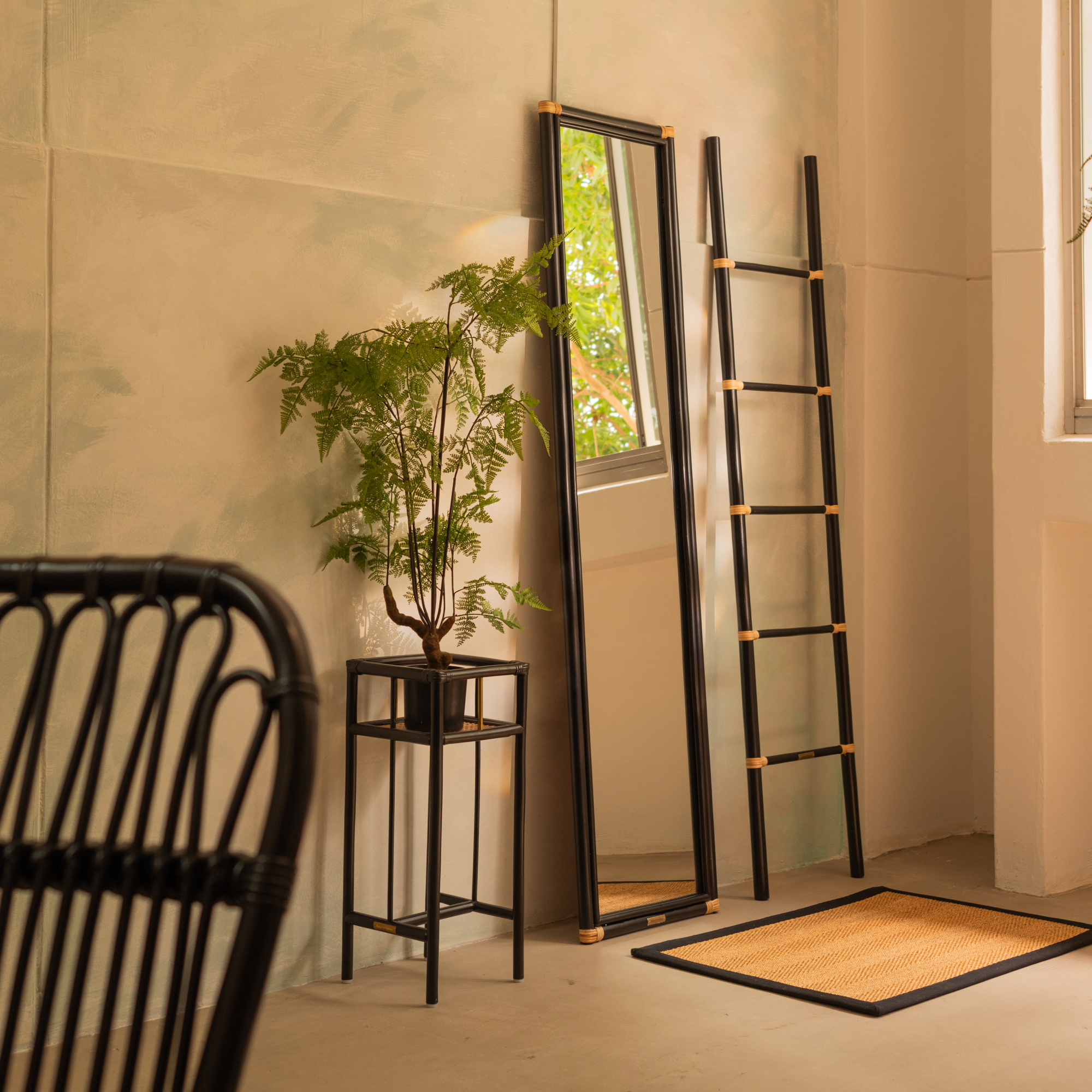
REI Floor Mirror, leaned against the wall alongside matching REI Cane Ladder for keeping bags and umbrellas within easy reach by the door.
For a narrow entryway or hallway, a slimmer wall mirror such as PUDDLE Wall Mirror can help create a greater sense of space without overwhelming it. For a full-length alternative, REI Floor Mirror has a clean, streamlined profile that keeps the space feeling open. Choose to mount it on the wall or lean it casually against one, depending on your space and preference.
Where to Place a Mirror in the Living Room
In the living room, positioning is mostly about daylight — try opposite or perpendicular to a window so light bounces further into the space.
In many Singapore homes — especially HDB flats and smaller condos — the entryway opens straight into the living room, so these two zones often function as one continuous space. The tips below apply just as well near your front door as they do further into the room.
In the living room, a mirror can work as both a decorative focal point and a way to reflect more natural light around the space. This is particularly useful in smaller living rooms or spaces that receive less direct sunlight.

ARCH Floor Mirror seen here with an upholstered LINN Gardening Stool in @shanglets' cosy apartment.
A floor mirror such as ARCH Floor Mirror or REI Floor Mirror can be leaned against a wall for a relaxed, layered look, especially alongside a rattan console, bench or clothes rack.
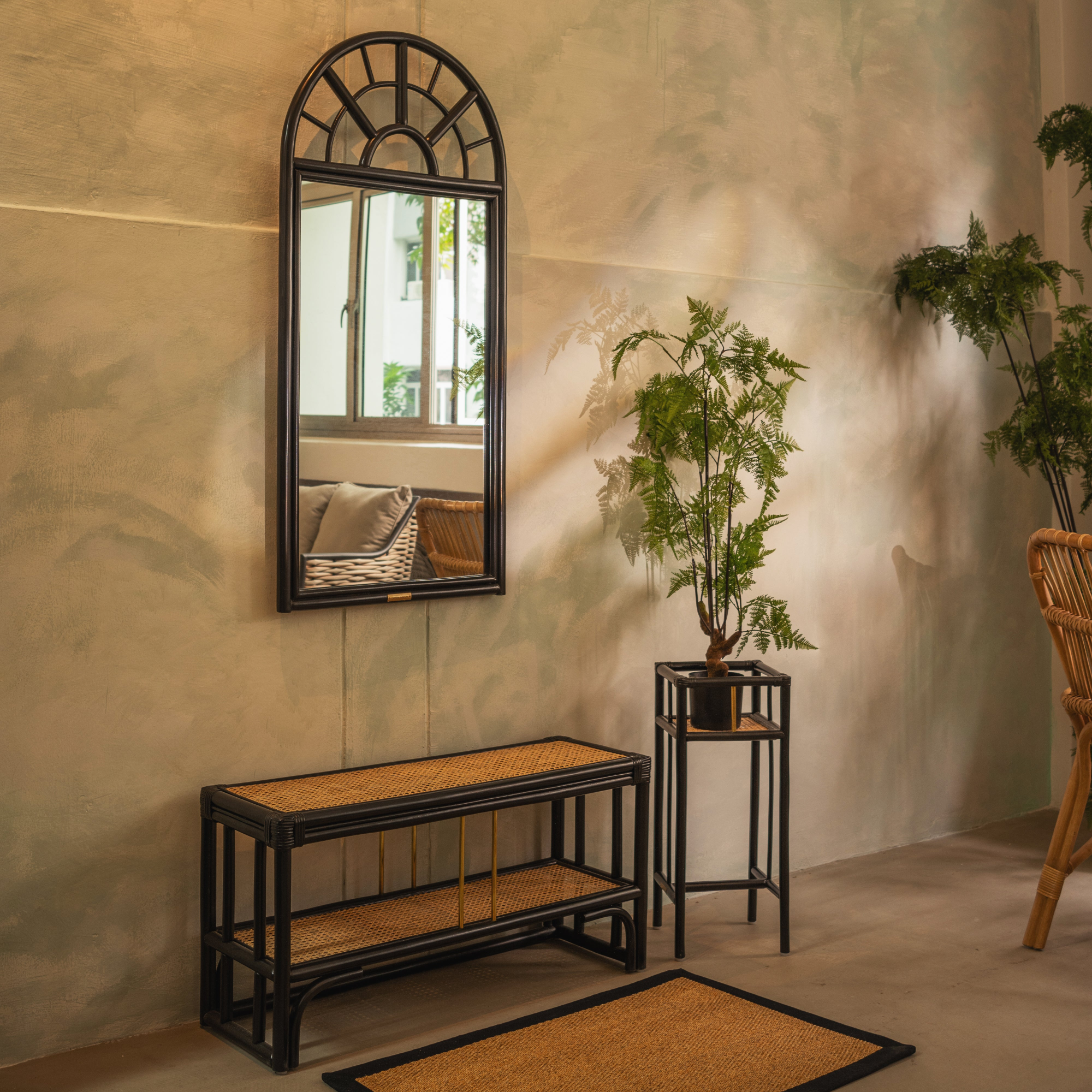
ALWI Window Mirror grounded by BROOK Shoe Bench for a balanced, anchoring look.
If you prefer a wall-mounted mirror, centre it above a console or other piece of furniture. As a guide, choosing a mirror around two-thirds the width of the furniture below it can help create a balanced proportion.
Where to Place a Mirror in a Bedroom or Vanity Corner
In the bedroom, function comes first — big enough to see yourself comfortably, placed somewhere it can catch natural daylight.
For a bedroom mirror or getting-ready corner, that means positioning it somewhere that receives natural daylight rather than relying solely on overhead lighting.
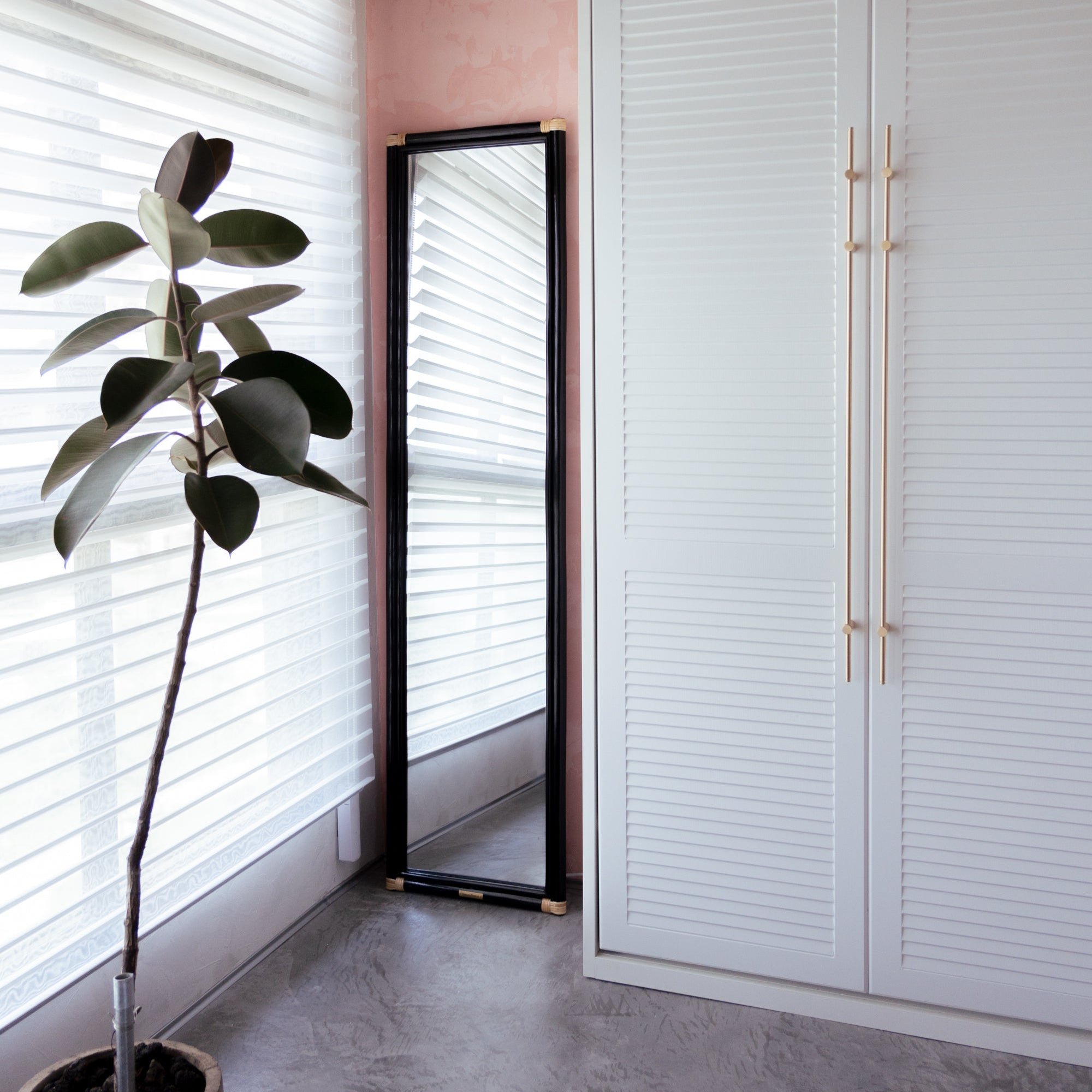
REI Floor Mirror in Black, positioned to catch natural daylight.
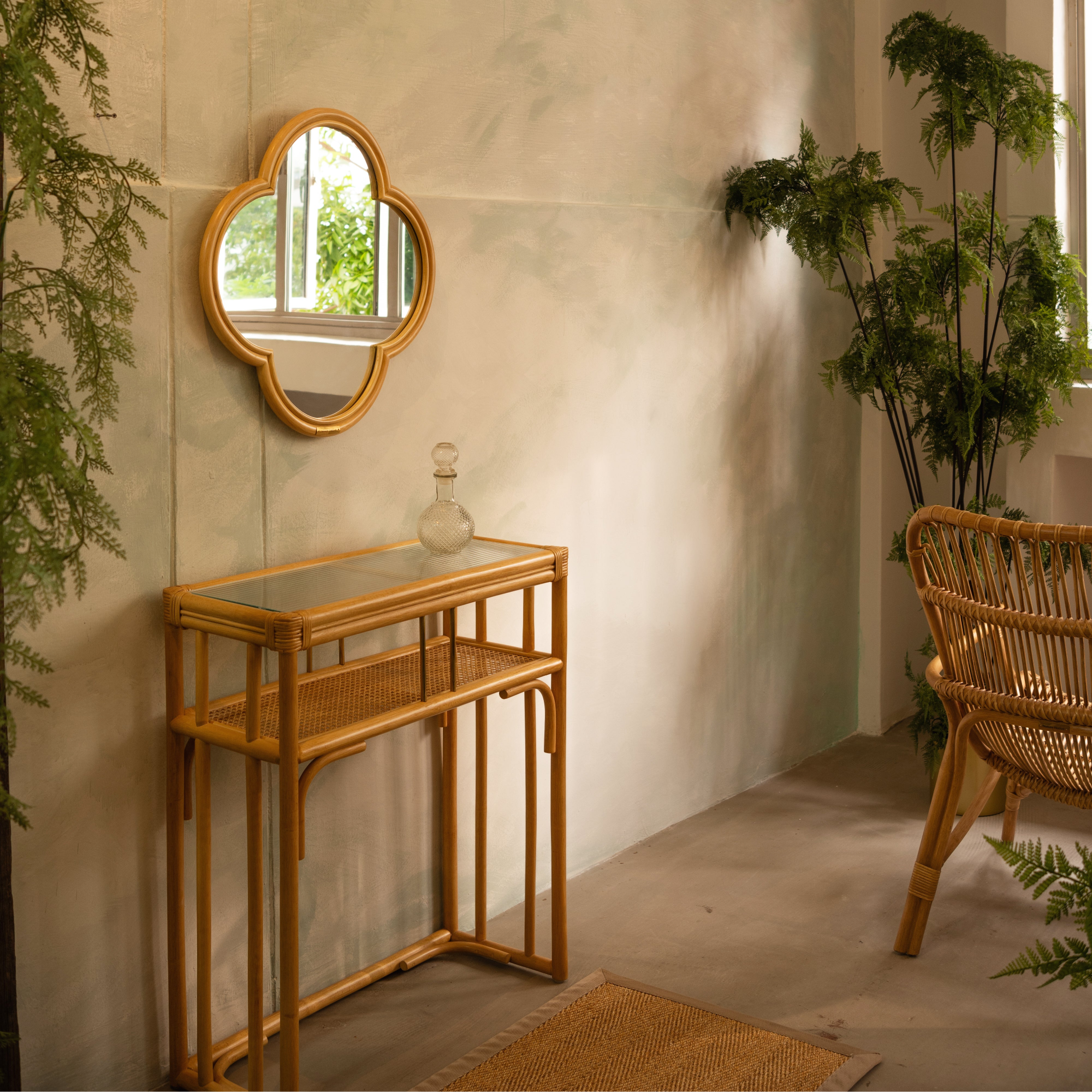
BLOOM Wall Mirror in Natural, above a matching console table, BROOK Console Table.
A BLOOM Wall Mirror, with its soft organic shape, works well above a console, a dresser or in a bedroom corner that doubles as a vanity.
In a small bedroom, placing a mirror where it can reflect daylight or an open part of the room can also help the space feel brighter and more spacious — particularly useful in compact Singapore homes.
Natural or Black Rattan Mirrors?
Choosing between a natural rattan mirror and a black rattan mirror comes down to the mood and contrast you want to create.
Natural rattan brings warmth, texture and a softer, more relaxed feel to a room. Black rattan creates stronger definition and can work particularly well against lighter walls or alongside darker accents.
If you're deciding between the two, read our full guide: Finding Your Vibe — A Guide to Choosing Between Natural and Black Rattan.
How to Hang a Mirror Safely
Mirrors are heavier and more fragile than most wall decor, so proper installation is important — particularly for large wall mirrors and floor mirrors.
- Always lift and carry a mirror by the sides of the frame rather than the corners, where pressure can be concentrated.
- All Nature Native mirrors, including both wall mirrors and floor mirrors, come with hook plates for secure mounting. When installing your mirror, use wall anchors and hanging hardware suitable for both the weight of the mirror and your wall type.
- For larger or heavier mirrors, consider professional installation rather than mounting them yourself.
If you'd prefer to leave the mounting to us, we can arrange for professional installation to ensure your piece is securely mounted and thoughtfully placed. Simply select the option at checkout.
How to Clean and Care for Your Mirror
Once your mirror is in place, a little regular care will keep both the glass and frame looking their best.
- Avoid placing rattan mirrors in bathrooms or poorly ventilated, humid areas, as prolonged exposure to moisture can affect the frame and mirror backing over time.
- Clean the glass with a soft, lint-free cloth and a gentle cleaning solution. Water with a small amount of dish soap, or equal parts water and white vinegar, works well.
- Avoid abrasive or ammonia-based cleaners, particularly around the frame and edges of the mirror.
- Spray your cleaning solution onto the cloth rather than directly onto the mirror to prevent moisture from collecting around the edges. Buff dry with a clean microfibre cloth for a streak-free finish.
Frequently Asked Questions
How high should you hang a wall mirror?
As a general guide, hang a wall mirror at eye level, with the centre of the mirror around 150–160cm from the floor. Adjust up or down depending on the height of the people using it most.Can a mirror be placed opposite a window?
Yes — positioning a mirror opposite or perpendicular to a window is one of the easiest ways to bounce daylight further into a room, especially useful in smaller or dimmer living rooms.What size mirror works best in a small bedroom?
There's no fixed size — what matters is that it's large enough to see yourself comfortably and placed somewhere it can reflect daylight or an open part of the room, which helps a small bedroom feel brighter and airier.Should I choose a wall mirror or a floor mirror?
Wall mirrors work well when you want a fixed, anchoring piece above furniture like a console. Floor mirrors offer more flexibility, since they can be mounted or simply leaned against a wall depending on the room.Natural or black rattan — which mirror frame should I pick?
Natural rattan brings a warmer, softer feel, while black rattan creates stronger definition and contrast, particularly against lighter walls. Either works — it comes down to the mood you want in the room.Is there a feng shui approach to mirror placement?
Yes — in feng shui, mirrors are treated as powerful energy tools. A common guideline is to avoid positioning a mirror directly facing your front door or reflecting your bed, and to favour placements that reflect light, greenery or an open view into the room instead. For more ways to bring balance into your space, see our guide: Transform Your Home: Six Simple Yet Impactful Feng Shui Tips.
Finding the Right Mirror for Your Space
The best mirror placement depends on what you want it to do. In an entryway, it can make everyday routines easier. In a living room, it can reflect natural light and anchor a wall. In a bedroom, it becomes part of your getting-ready space.
And if you're torn between a wall mirror and a floor mirror, let the room decide: a wall mirror suits a fixed, anchoring spot above furniture, while a floor mirror flexes between mounted or simply leaned, depending on how the space evolves.
Once you've found the right position, choose a mirror with proportions, materials and a finish that feels at home with the rest of your space.
For more on how natural materials bring warmth into a room, see our journal piece on Why Rattan Furniture Feels Like Home.